
As you already know, there are different categories of Architectural projects. The two most significant of these are Residential and Commercial, but there is a sub-category that every client should be familiar with – Heritage.
Heritage Buildings are buildings which possess national architectural, historic or cultural value. They are classified by the relevant Government Heritage Authority that services the area in which the building is situated. They have more laws that apply to them, which govern any demolitions, renovations, or extensions that your project may require. Therefore, it is worth acquainting yourself with all relevant information concerning Heritage architecture – such as which laws affect the building process, the different ways of altering and extending the buildings, and what are the functions of organisations such as the ‘South African Heritage Resources Agency’ and Heritage ‘Western Cape’?
Which Heritage Laws affect the building process?
According to the National Heritage Resources Act, any building older than 60 years may only be altered if the person implementing the alteration has been issued a permit by the appropriate Government Heritage Authority.
To acquire this permit, one must make an application to their Municipal Department of Arts, Culture and Heritage services. The application must include drawings drafted by an architectural professional, as well as their recommendations regarding the demolition and or alteration processes. The accepted convention for these drawings is to represent the proposed alteration as a colour overlay on black & white original plans of the building.
Before the proposal can be approved, the building must be assessed to determine its architectural, historical, and cultural value. This may require a consultation from an Architect or other professional where necessary. Through this process, the authority needs to establish whether or not the building is a significant example of a relevant architectural style or national achievement – and whether its loss will outweigh the benefits of its change. However, the approval process is entirely at the discretion of your local heritage authority, as it nearly impossible to standardise an assessment procedure for the endless variety of buildings constructed over 60 years ago. If approval is granted, the alterations may proceed.
Different ways to alter and extend Heritage Buildings
As we established in the previous section, there are specific rules and regulations that govern ‘Heritage projects’ – so what design is worth proposing?
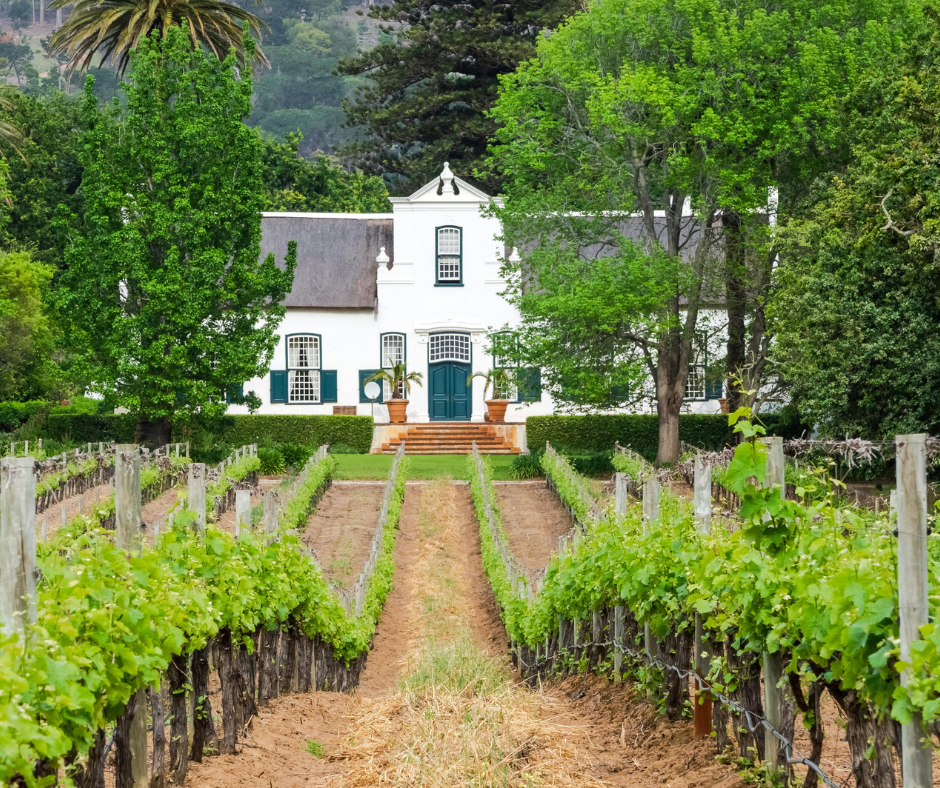
It is of paramount important to protect your country’s tradition. The old buildings of a country contribute enormously to its heritage and demolishing them has the potential to strip away its national identity. In South Africa, we are incredibly fortunate to have historic architecture from many different cultures – such as the residential architecture of the Basotho tribe, or gabled thatch-roof houses of the Cape Dutch. However, protecting a country’s heritage doesn’t necessarily mean you can’t alter heritage buildings. Certain alterations can be hugely beneficial to some areas and can even add a great deal of architectural value. To bridge the divide between preservation and innovation, there are many innovative design devices that architects can employ. These architectural devices would make any design both beautiful and historically sensitive.
For example, one contemporary approach to Heritage alteration is to juxtapose the old and the new. This could be done by thoroughly restoring the original building and using clean, contemporary materials for the extensions and renovations – creating contrast between the original architecture and the new contemporary space. This might also be done by maintaining the original facades of the heritage building and designing the interior to have a highly modern aesthetic.
If you decide that the building on your site needs to be demolished, consider designing your building in such a way that it alludes to the architectural style of the original building – which could be done spatially or aesthetically.
Who are SAHRA and HWC?
SAHRA and HWC are South African organisations that specifically implement all the rules and regulations that concern the country’s Heritage.
‘SAHRA’ stands for the South African Heritage Resources Agency – which serves as the government’s Department of Sports, Arts, and Culture. The Department is tasked with an “overall legislative mandate to identify, assess, manage, protect, and promote heritage resources in South Africa”.
‘HWC’ stands for Heritage Western Cape, and it has a very similar function to SAHRA, though it only serves the Western Cape. Heritage Western Cape is “mandated to implement and enforce the National Heritage Resources Act, at a provincial level”.
For more information about our innovative architectural services and on how we can assist you, get in touch with our team of professional architects and designers in Durban and Cape Town.